Every classic restoration eventually hits the same wall: a part that no longer exists. The donor cars are picked clean, the reproduction houses never tooled it, and the forums are full of people chasing the same component you are. The car is otherwise sound. It is held up by one piece of metal nobody makes anymore.
That is precisely the job custom machining is built for. The part existed once, which means it can exist again. We do not need a catalogue, a part number, or original factory drawings. We need the broken original, or enough information to reconstruct it.
The "no longer available" problem
For most mass-produced cars, parts supply follows a curve: plentiful, then thinning, then nothing. Once a model drops below a certain population, it stops being worth anyone's while to tool up a production run. The parts that vanish first are usually the small, unglamorous, mechanically critical ones: brackets, linkages, housings, specific fasteners, trim clips, adaptors. The exact pieces that stop a restoration dead.
Buying another worn original off a wrecker is not a fix. It just resets the same clock. Remaking the part in the correct material breaks the cycle.
What we can remake
If it can be measured or reconstructed, it can be machined. Typical restoration work includes:
- Mechanical parts. Brackets, mounts, pulleys, linkage arms, housings, bushings and spacers.
- Trim and detail parts. Bezels, knobs, escutcheons and badges, where the original finish can be matched.
- Adaptors and one-offs. Parts that let a modern component fit an old assembly, or that bridge two systems cleanly.
- Fasteners and hardware. Non-standard bolts, studs and fittings that no current thread spec covers.
Working from a worn or broken original
This is the part most people assume is impossible, and it is the most routine thing we do. A worn part still carries almost all of its own specification. The trick is separating the original design intent from the wear and damage.
- We measure what survives. Mating faces, bolt patterns, bores and thread forms are usually intact even when the part has failed elsewhere. Those are the dimensions that have to be right.
- We reconstruct what is lost. A cracked or worn feature gets rebuilt to its original geometry, not copied in its failed state. If a part wore out because the original design was weak, we can reinforce it without changing how it fits.
- We model it. The reconstructed part is drawn in Fusion 360, so you have a permanent digital record. If you ever need a second one, the hard work is already done.
If you only have a photograph, a fragment, or even a clear description plus a few key measurements, that is often enough to start. The more original material you can send, the more accurate and the cheaper the result.
The most useful thing you can send is the broken part itself. Even in pieces. It carries its own dimensions, its own fitment, and its own material clues. A photo with a ruler in frame is a workable second best.
Matching the original material
Authenticity and durability both depend on getting the material right. A bracket that was originally steel should come back as steel, not aluminium, so it behaves the same under load and corrodes at the same rate as everything around it. Where the original failed because the factory material was marginal, we can step up to a better grade while keeping the form identical. We will tell you when that trade-off is worth making and when originality should win.
How a restoration part gets made
- Send us the part. The original, a fragment, or photos with measurements.
- We reconstruct and confirm. We rebuild the geometry, confirm the material and finish, and check fitment points with you before cutting metal.
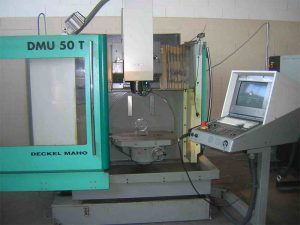
- We machine and finish it. Cut on our 5-axis machine and finished to suit, whether that is bead-blasted, polished, or left ready for plating.
- You get it back, plus the CAD. Quality checked, shipped Australia-wide, with the digital model on file for next time.