Saltwater is patient. A fitting that looks fine on launch day can be weeping rust streaks two seasons later, not because the part was cheap, but because it was the wrong grade of stainless in the wrong place. Choosing the right material and the right geometry up front is the difference between hardware that outlasts the boat and hardware you replace on a schedule.
316 vs 304: the saltwater difference
Both 304 and 316 are austenitic stainless steels and both look identical once polished. In a marine environment they behave very differently. The deciding factor is molybdenum.
316 contains roughly 2 to 3 percent molybdenum, which 304 does not. That addition dramatically improves resistance to pitting and crevice corrosion, the two failure modes that chloride-rich saltwater drives. Pitting starts as a microscopic breakdown of the passive layer and bores inward. Crevice corrosion attacks the shielded gaps under washers, inside threads and beneath fittings, exactly where you cannot see it until the part fails. 304 will hold up in freshwater and splash zones. In permanent saltwater exposure it is living on borrowed time, and 316 is the correct specification.
| Property | 304 | 316 |
|---|---|---|
| Molybdenum | None | 2 to 3 percent |
| Pitting resistance | Moderate | High |
| Crevice corrosion | Vulnerable | Strongly resistant |
| Best use | Freshwater, splash | Permanent saltwater |
Where off-the-shelf marine hardware fails
Even in the right grade, generic fittings fail for reasons that have nothing to do with the metal and everything to do with how they were specified and installed.
- Galvanic pairing. A stainless fitting bolted to aluminium or a dissimilar metal, with seawater as the electrolyte, sets up a galvanic cell. The less noble metal corrodes fast. Off-the-shelf parts are not designed around your specific metal stack, so the pairing is left to chance.
- Undersized for the load. Catalogue parts are sized for a generic case. Standing rigging, towing points and lifting eyes see shock loads that a borderline fitting will not survive.
- Generic geometry. The bolt pattern is close but not exact, the angle is slightly off, or the fitting fouls something nearby. Forcing a near-fit introduces stress and accelerates failure.
A custom-machined part removes all three: correct grade, sized to the real load, and made to the exact geometry your installation needs.
What we machine in 316
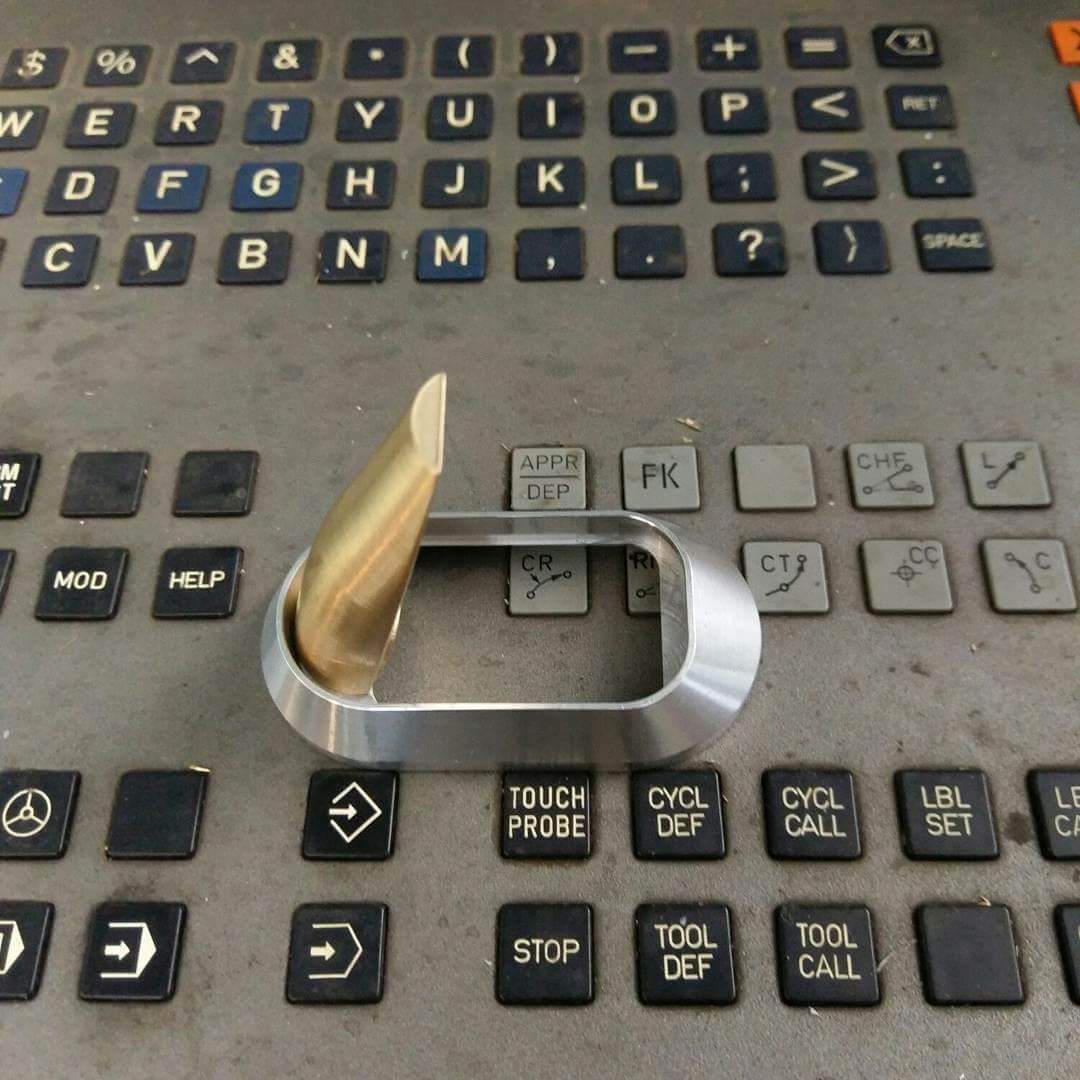
If it can be drawn or copied, it can be made. Common marine work includes custom brackets and mounts, deck fittings, chainplates and tangs, bushings and spacers, fairleads, one-off replacements for discontinued hardware, and adaptors that bridge two systems that were never designed to connect.
Finishing: passivation and electropolishing
Machining 316 is only half the job. The cutting process can leave free iron particles and a disturbed surface that become corrosion initiation sites. Passivation chemically removes that surface iron and restores the chromium-rich passive layer that makes stainless stainless. Electropolishing goes further, smoothing the surface at a microscopic level so there are fewer crevices for chlorides to attack and the part stays brighter for longer. For permanent saltwater hardware, the finish is not cosmetic. It is part of the corrosion strategy.
The practical test: if a stainless part shows brown surface staining ("tea staining") within a season, it is either the wrong grade for the exposure or it was never passivated. Both are avoidable by specifying correctly at the start.
How a marine part gets made
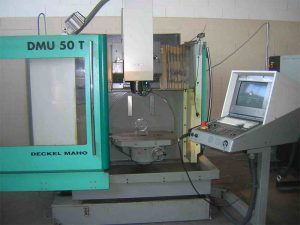
The process is the same whether you are replacing a failed fitting or designing something new: send us the part or a drawing, we confirm grade, load, geometry and finish, then we machine it from 316 bar or plate and passivate it before it ships. If you are matching an existing fitting, the worn original is the most useful thing you can send, because it carries the dimensions and the fitment with it.